There's No Such Thing as Negative Emotions: Comfortable Vs. Uncomfortable Emotions
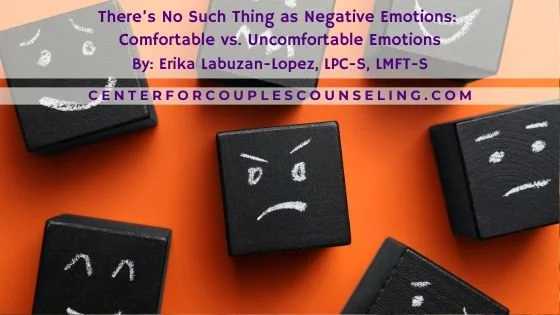
January has a way of making emotions feel like a problem to solve. A new year invites fresh starts, better habits, and a quiet pressure to “do relationships better.” For many couples, that pressure turns into an unspoken goal: fewer arguments, less sadness, less anger, more calm, more positivity.
But this goal often backfires.
One of the most common blunders couples make is believing that certain emotions don’t belong in a healthy relationship. Anger becomes something to avoid. Sadness feels inconvenient. Fear feels irrational. Jealousy feels shameful. When these emotions show up, partners rush to shut them down, smooth them over, or explain them away. These are normal, and helpful, emotions to experience and observe.
In reality, there is no such thing as a negative emotion. There are only comfortable emotions and uncomfortable emotions — and all of them carry important information. All emotions provide valuable data.
All emotions exist for a reason. And when couples learn how to make space for the uncomfortable ones, relationships become safer, not shakier.
Where the Myth of “Negative Emotions” Came From
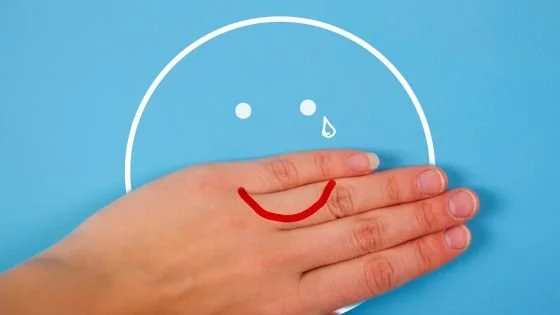
Many of us learned early on that some feelings were acceptable while others were not. Happiness was encouraged. Gratitude was praised. Calmness was rewarded. But anger might have been labeled disrespectful. Sadness inconvenient. Fear weak. And, our bodies feel more heightened and reactive when experiencing certain emotions that point to fear or scarcity. Contracting tension versus expansive tension. That combined with these labels means over time, we internalized the idea that feeling certain emotions meant something was wrong — with us or with the relationship.
So when uncomfortable emotions surface in adulthood, especially with a partner we care deeply about, panic often follows. Why am I feeling this way? Why are you feeling this way? Shouldn’t we be past this by now?
This is where couples get stuck — not because of the emotion itself, but because of the fear surrounding it.
When emotions get labeled as negative, several things tend to happen in relationships:
Partners try to shut feelings down quickly
Conflict escalates when emotions aren’t “allowed”
One partner becomes the “emotional one,” the other the “rational one”
Emotional expression turns into blame, shame, or withdrawal
You might hear things like:
“Why are you so upset about this?”
“Can we just stay positive?”
“I don’t want to fight — let’s drop it.”
“You’re overreacting.”
While often well-intended, these responses send a powerful message: your emotions are a problem.
Comfortable vs. Uncomfortable Emotions

Reframing emotions as comfortable or uncomfortable changes everything. Joy, contentment, and excitement are easier to sit with. Anger, sadness, fear, shame, and jealousy require more emotional tolerance.
But uncomfortable does not mean harmful. It usually means important.
Anger often points to a boundary that’s been crossed. Sadness can signal loss or unmet needs. Fear highlights vulnerability. Jealousy often longs for reassurance or security. When couples listen beneath the emotion instead of reacting to it, the conversation shifts from conflict to understanding.
Uncomfortable emotions aren’t asking to be fixed — they’re asking to be heard. When couples learn to listen instead of react, emotions become guides rather than threats.
Consider this common scenario:

Partner A expresses frustration, Partner B rushes to fix it: offering solutions, minimizing the problem, or encouraging partner A to “look on the bright side.” Partner A ends up feeling dismissed, while partner B feels exhausted and unappreciated.
Neither partner is wrong — but the relationship gets stuck.
Partner B believes emotions should be resolved quickly.
Partner A needs emotions to be understood first.
This is a common mismatch in couples and a major source of conflict.
What Happens When Emotions Aren’t Allowed
When couples believe certain emotions shouldn’t exist, they tend to surface anyway — just in more damaging ways. Suppressed anger turns into sarcasm, shutdown, or cut-off. Unspoken sadness becomes distance. Fear shows up as control or avoidance. Over time, couples find themselves having the same arguments again and again, unsure why nothing ever feels resolved.
The problem was never the emotion. The problem was the lack of emotional permission.
A New Perspective for January: Emotional Permission
A healthier relational goal for the new year isn’t fewer emotions — it’s greater capacity to sit with them. Emotional safety doesn’t come from constant harmony; it comes from knowing that all feelings are allowed in the room.
When partners respond with curiosity instead of correction, emotions soften naturally. Phrases like “That makes sense,” or “Tell me more about what this brings up for you,” create space rather than pressure. The nervous system settles. Defensiveness lowers. Connection becomes possible again.
This doesn’t mean every emotional expression is productive or kind. It means emotions are acknowledged before behavior is addressed.
Feeling anger is allowed; attacking is not. Feeling sadness is welcome; withdrawing indefinitely is not. This distinction matters.
Why This Shift Changes Relationships

Couples who learn to tolerate uncomfortable emotions don’t magically stop fighting — but they fight differently. They repair faster. They feel safer telling the truth.
They stop treating emotions as emergencies and start treating them as information.
Most importantly, they stop fearing each other’s inner worlds.
Practical Tools for Couples:
1. Name the Emotion Without Judging It
Instead of “I’m mad because you always…” try:
“I’m feeling angry and overwhelmed.”
“I notice I’m feeling hurt right now.”
This keeps emotions from turning into accusations.
2. Replace Fixing With Curiosity
Try asking:
“What does this feeling need right now?”
“Is this about reassurance, support, or understanding?”
3. Practice Co-Regulation
Sit together, slow your breathing, lower your voices. Emotional safety often comes from shared nervous system regulation, not logic.
4. Normalize Emotional Differences
Partners don’t need to feel the same emotion to respect it. Understanding matters more than agreement.
Ready for a Healthier Emotional Dynamic?

If your relationship feels caught in cycles of emotional shutdown, reactivity, or misunderstanding, couples therapy can help you build the capacity to hold more — without becoming overwhelmed.
At the Center for Couples Counseling, we help couples move away from emotional avoidance and toward emotional safety. Through weekly therapy or focused couples intensives, partners learn how to listen beneath emotions, regulate together, and create a relationship where honesty doesn’t threaten connection.
My name is Erika Labuzan-Lopez, LMFT-S, LPC-S and I’m the owner at the Center for Couples Counseling. I love using a variety of techniques to help couples learn why they move into childish spaces during conflict, how to put down those defenses for good, and what to do when you can’t access the tools you know will work to get out of conflict. I love working with couples and individuals to learn how to live in the world more relationally and engage in meaningful relationships. With over a decade of couples therapy experience, I am passionate about training and supervising therapists to become specialized in highly effective couples therapy. We see couples, individuals, and all residents of Texas online. Call (832) 827-3288 to schedule your FREE phone consultation.
Start Couples Therapy in League City, TX
Are you and your partner struggling with marital issues? Looking to build a strong and secure relationship? At Center For Couples Counseling, you and your partner can learn to reconnect, create a healthy relationship, and gain support from our skilled couples therapists. To get started with couples therapy follow these three simple steps:
Contact us to schedule an appointment
Meet with one of our caring couples therapists
Begin working on your relationship and reconnect with your partner.
Other Services Offered At Center For Couples Counseling
Our team understands your relationship might be facing different challenges. So our Texas practice offers other therapies to help you face these challenges. Other services include individual therapy, infertility counseling, postpartum anxiety and depression counseling, therapy for self-care and burnout, and therapy for perfectionism. For more about us check out our FAQs and blog!