Your Nervous Systems Are in a Relationship, Too: Co-Regulation Skills for the Holiday Season
The holidays have a way of bringing out the best and worst in our relationships. We might genuinely look forward to family traditions, decorating, traveling, and gathering around the Thanksgiving table while simultaneously feeling overwhelmed by expectations, finances, complicated family dynamics, and an endless list of responsibilities. By the time our partner asks one seemingly innocent question, we may already be operating with very little emotional bandwidth.

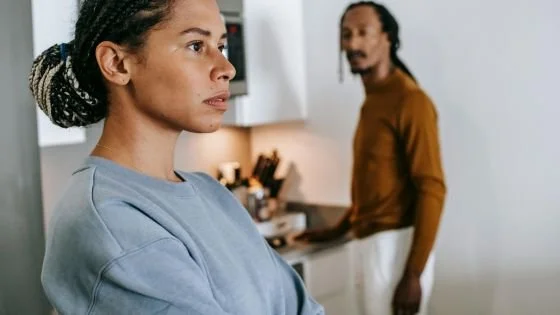
Maybe your spouse asks what time you're leaving for Thanksgiving dinner, and you snap because you've already answered that question three times. Maybe one partner becomes unusually quiet at a family gathering while the other interprets that silence as irritation. What looks like a communication problem may actually be two nervous systems responding to stress in very different ways.
This is where understanding co-regulation can make an enormous difference. We often focus on learning how to regulate ourselves, but our relationships heavily influence how our bodies respond to stress. The people closest to us can help us feel safer and more settled, or unintentionally contribute to our sense of overwhelm.
What Is Co-Regulation, and Why Does It Matter?
Co-regulation is the process through which people influence one another's emotional and physiological states. Our nervous systems respond to cues from the people around us, including facial expressions, tone of voice, physical touch, and patterns of interaction. When we're stressed, a reassuring response from someone we trust can sometimes help us settle more effectively than trying to manage everything alone.

Research supports the idea that close relationships influence our physiological responses to stress. In a well-known study by psychologist James Coan and colleagues, married women showed reduced neural responses to threat while holding their husbands' hands, particularly in higher-quality marriages. Other research examining physiological linkage between romantic partners suggests that couples can influence one another's stress responses in both helpful and unhelpful ways.
That last distinction matters. Co-regulation isn't automatically positive, and partners can escalate one another just as easily as they can help one another settle. If one person becomes anxious and the other responds with irritation, criticism, or urgency, both may become increasingly activated.
The goal isn't to make your partner responsible for your emotional state. It's to recognize that how we show up with one another matters, particularly when we're already stressed.
Recognizing When Your Nervous System Is Overwhelmed

Before we can effectively co-regulate, we need to recognize what's happening in our own bodies. When our nervous system perceives stress or threat, we may experience an increased heart rate, shallow breathing, muscle tension, irritability, difficulty concentrating, or an urge to escape the situation.
Some people become louder and more reactive, while others withdraw, become quiet, or struggle to find their words.
In couples therapy, we often refer to intense physiological activation during conflict as flooding. When someone is flooded, their ability to listen, problem-solve, and respond thoughtfully becomes compromised. Unfortunately, this is often exactly when couples try hardest to resolve their disagreements.
During the holidays, I encourage couples to pay attention to their individual warning signs before they reach that point. Maybe you notice yourself clenching your jaw while preparing dinner, becoming increasingly sensitive to noise, or feeling disproportionately irritated by ordinary requests.
Recognizing those early signs gives you an opportunity to intervene before the situation escalates.
Practical Co-Regulation Skills for Couples
One of the simplest co-regulation strategies is also one of the most overlooked: slow down your response. When your partner is overwhelmed, resist the urge to immediately offer solutions, defend yourself, or explain why their reaction doesn't make sense. Instead, take a breath, lower your voice, soften your facial expression, and acknowledge what you're noticing. Something as simple as, "You seem really overwhelmed. What would be helpful right now?" can change the direction of an interaction.

Physical connection can also be regulating when it's welcome. Holding hands, sitting close together, or offering a hug may provide reassurance without requiring a lengthy conversation. However, touch isn't universally calming, particularly when someone is overstimulated, angry, or has a history of unwanted physical contact. Asking, "Would a hug help, or would you rather have some space?" allows your partner to identify what actually feels supportive.
Breathing exercises are another useful tool, particularly when both partners are willing to participate. Research on slow-paced breathing suggests benefits for heart rate variability and other physiological measures associated with regulation. You might sit together for two minutes, inhaling gently through your nose for approximately four seconds and exhaling for six, without forcing deep breaths or trying to perfectly synchronize.
The goal isn't to eliminate emotion but to give your bodies an opportunity to settle.
For some couples, co-regulation means doing less together rather than more. If one partner is overstimulated by a crowded holiday gathering, stepping outside for fresh air or sitting quietly in the car may be more helpful than attempting to talk through everything. Sometimes the most supportive response is, "I'll handle things here. Take ten minutes."
Knowing When to Take a Break
One misconception about co-regulation is that couples should always stay physically or emotionally connected when distressed. In reality, sometimes the healthiest thing partners can do is temporarily separate and practice individual regulation.

The Gottman Method recommends taking a break of at least 20 minutes when conflict becomes overwhelming, using that time for genuinely calming activities rather than mentally rehearsing arguments. The important piece is communicating when you'll return to the conversation so that the break doesn't feel like abandonment or become an excuse for avoidance.
During the holidays, this might sound like, "I'm getting overwhelmed, and I don't want to take it out on you. I'm going to take a walk, and we can talk after dinner."
That communicates both a need for space and a commitment to reconnect.
Creating a Holiday Co-Regulation Plan
Rather than waiting until someone becomes overwhelmed, I encourage couples to discuss their needs before holiday activities begin. Consider a few practical questions together:
What situations tend to overwhelm each of us during the holidays?
How can we recognize when the other person needs support?
What helps each of us regulate: touch, reassurance, quiet, movement, humor, or practical assistance?
What signal can we use when we need a break from a gathering?
How will we share responsibilities so one partner isn't carrying the majority of the holiday stress?
These conversations don't need to be complicated. Sometimes a simple agreement to check in before and after family gatherings, divide responsibilities more intentionally, or give each other permission to step away can prevent unnecessary conflict.
Becoming a Source of Safety for One Another

The goal of co-regulation isn't to remain calm all the time or prevent every disagreement. It's to become more aware of how our nervous systems influence one another and develop ways of responding that support connection rather than escalating distress.
As the holidays approach, consider shifting your focus from managing every detail perfectly to paying attention to how you and your partner are experiencing the season.
The decorations, meals, and traditions may be important, but so is the emotional environment you're creating together.
My name is Erika Labuzan-Lopez, LMFT-S, LPC-S and I’m the owner at the Center for Couples Counseling. I love using a variety of techniques to help couples learn why they move into childish spaces during conflict, how to put down those defenses for good, and what to do when you can’t access the tools you know will work to get out of conflict. I love working with couples and individuals to learn how to live in the world more relationally and engage in meaningful relationships. With over a decade of couples therapy experience, I am passionate about training and supervising therapists to become specialized in highly effective couples therapy. We see couples, individuals, and all residents of Texas online. Call (832) 827-3288 to schedule your FREE phone consultation.
Start Couples Therapy in League City, TX
Are you and your partner struggling with marital issues? Looking to build a strong and secure relationship? At Center For Couples Counseling, you and your partner can learn to reconnect, create a healthy relationship, and gain support from our skilled couples therapists. To get started with couples therapy follow these three simple steps:
Contact us to schedule an appointment
Meet with one of our caring couples therapists
Begin working on your relationship and reconnect with your partner.
Other Services Offered At Center For Couples Counseling
Our team understands your relationship might be facing different challenges. So our Texas practice offers other therapies to help you face these challenges. Other services include individual therapy, infertility counseling, postpartum anxiety and depression counseling, therapy for self-care and burnout, and therapy for perfectionism. For more about us check out our FAQs and blog!